

Hey there! As a supplier of heat recovery ventilators (HRVs), I often get asked about the difference between cross - flow and counter - flow HRVs. So, let's dive right in and break it down in a way that's easy to understand.
First off, what the heck is a heat recovery ventilator? Well, in simple terms, an HRV is a device that helps to bring fresh air into your home or building while simultaneously exhausting stale air. And the cool part is, it recovers heat from the outgoing air and transfers it to the incoming air, which can save you a ton on heating and cooling costs.
Now, let's talk about cross - flow HRVs. In a cross - flow heat recovery ventilator, the incoming and outgoing air streams flow perpendicular to each other. Picture two rivers flowing at a right angle to one another. The heat exchange happens as the two air streams pass by each other in this perpendicular setup.
One of the big advantages of cross - flow HRVs is their simplicity. They're relatively easy to design and manufacture, which often means they're more affordable. If you're on a tight budget, a cross - flow HRV might be the way to go. They also tend to be more compact, making them a great option for smaller spaces like apartments or small offices.
But cross - flow HRVs do have their drawbacks. The heat transfer efficiency isn't as high as that of counter - flow HRVs. Since the air streams are flowing perpendicular to each other, there's less opportunity for complete heat exchange. This means that you might not save as much on your energy bills compared to using a counter - flow HRV.
On the other hand, counter - flow HRVs have the incoming and outgoing air streams flowing in opposite directions. It's like two trains passing each other in opposite directions on parallel tracks. This setup allows for a much more efficient heat exchange.
The key benefit of counter - flow HRVs is their high heat transfer efficiency. Because the air streams are flowing in opposite directions, they have a longer contact time with each other, which means more heat can be transferred from the outgoing air to the incoming air. This translates to significant energy savings over time. If you live in an area with extreme temperatures, a counter - flow HRV can really pay off in the long run.

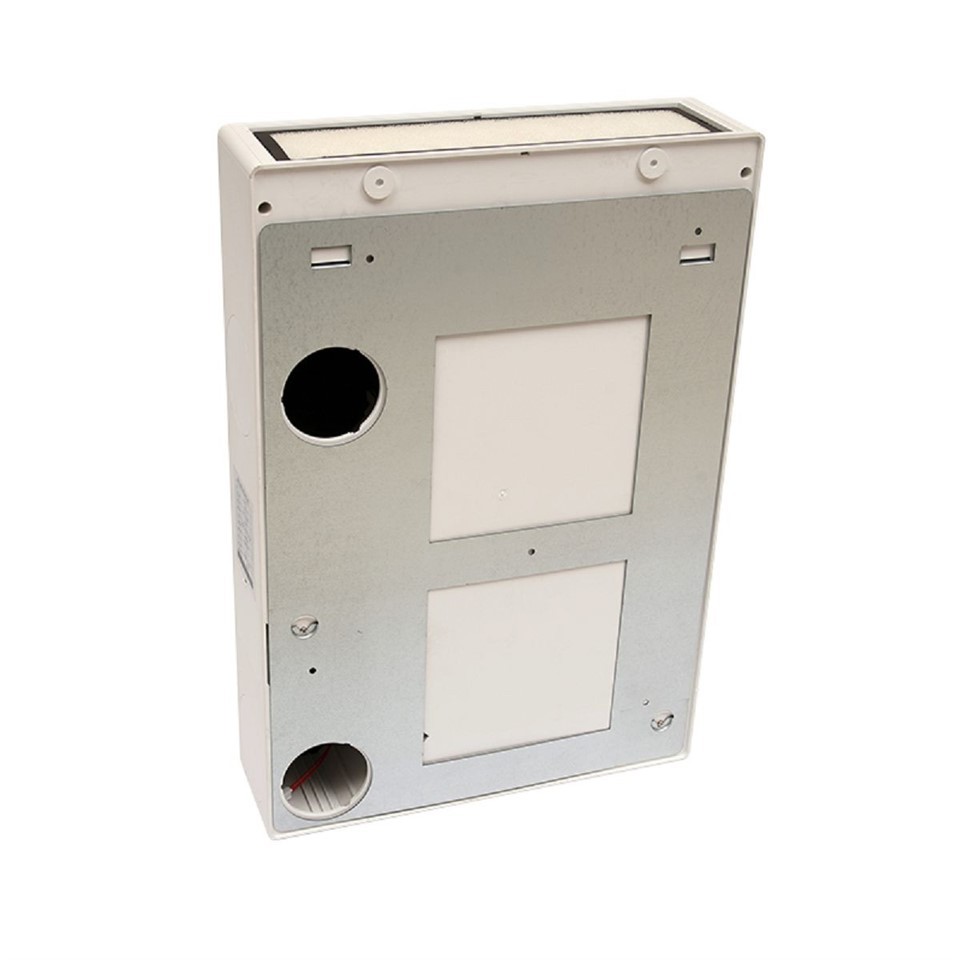
However, counter - flow HRVs also come with some downsides. They're more complex to design and build, which usually makes them more expensive. They also tend to be larger in size, so you'll need more space to install them. If you have a small home or office, finding a place for a counter - flow HRV might be a challenge.
Now, let's talk about where you might want to use each type of HRV. For residential use, a cross - flow HRV can be a great choice for smaller homes or apartments. It can provide adequate ventilation and heat recovery at a reasonable cost. Check out our Residential Heat Recovery Ventilator options for more details.
If you have a larger home or a commercial building, a counter - flow HRV might be more suitable. The energy savings can really add up over time, and the higher heat transfer efficiency can help maintain a more comfortable indoor environment. Take a look at our Commercial Heat Recovery Ventilator(hrv) selection.
And if you're short on space and need a more flexible installation option, our Wall Mounted Heat Recovery Ventilator could be the answer. It's a compact solution that can still provide good ventilation and heat recovery.
So, which one should you choose? It really depends on your specific needs, budget, and the size of your space. If you're not sure, don't hesitate to reach out to us. We've got a team of experts who can help you figure out the best HRV for your situation. Whether you're looking for a cost - effective cross - flow HRV or a high - efficiency counter - flow HRV, we've got you covered.
If you're interested in purchasing an HRV, we'd love to have a chat with you. Our team can walk you through the different models, answer all your questions, and help you make an informed decision. Just get in touch, and let's start the conversation about improving your indoor air quality and saving on energy costs.
In conclusion, both cross - flow and counter - flow heat recovery ventilators have their pros and cons. By understanding the differences between them, you can choose the one that's right for you. And as a trusted supplier of HRVs, we're here to support you every step of the way.
References
ASHRAE Handbook - HVAC Systems and Equipment. American Society of Heating, Refrigerating and Air - Conditioning Engineers.
Dincer, I., & Rosen, M. A. (2013). Thermal Energy Storage: Systems and Applications. John Wiley & Sons.